
What Do Standard Deviation and Correlation Mean in Monte Carlo?
Understanding Standard Deviation and Correlation in Monte Carlo
Monte Carlo analysis in WealthTrace models how your plan performs across a range of possible market conditions. Two key inputs that drive these results are standard deviation and correlation.
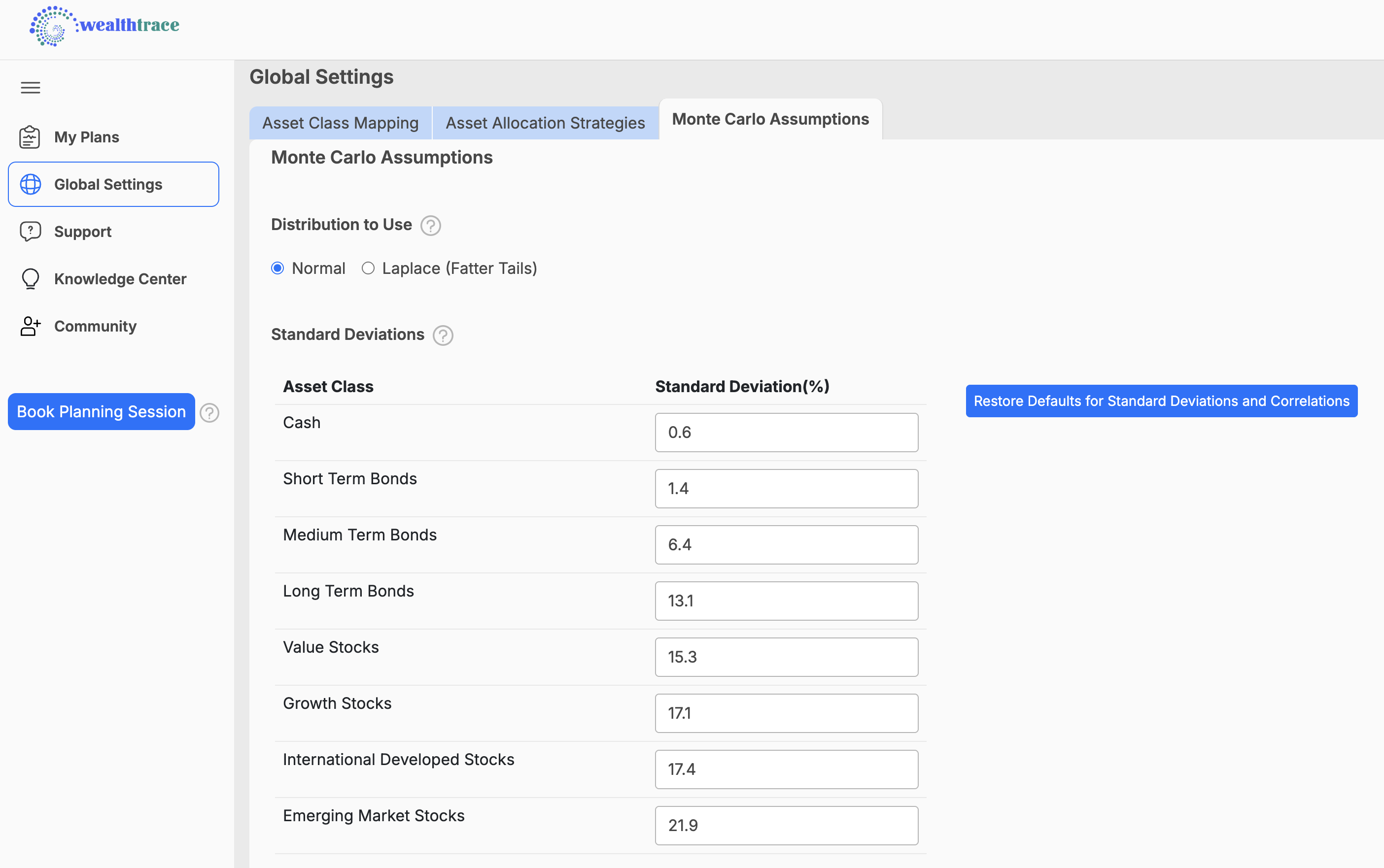
Standard Deviation (Volatility)
Standard deviation measures how much returns can vary from the average.
For example, if an asset has:
- Average return: 8.5%
- Standard deviation: 17.3%
Most years will fall roughly between -9% and +26%, though more extreme outcomes are possible.
- Higher standard deviation = more volatility and risk
- Lower standard deviation = more stable returns
Correlation (How Investments Move Together)
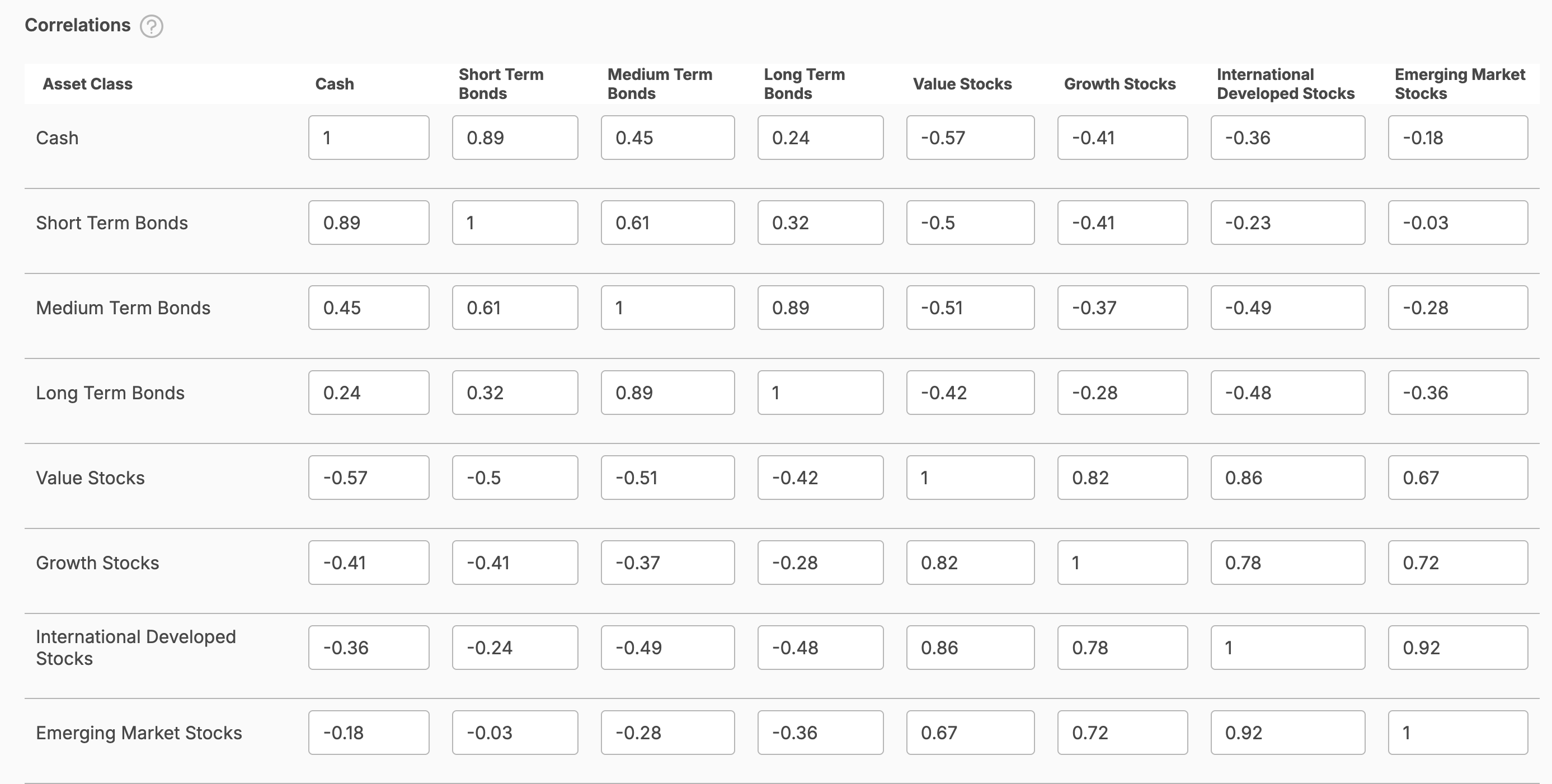
Correlation measures how investments move relative to each other:
- +1.0 → move together
- 0 → unrelated
- -1.0 → move opposite
Lower correlation helps reduce overall portfolio volatility through diversification.
Why This Matters
- Standard deviation determines how much returns can vary
- Correlation determines how your investments move together
- Together, they shape your Monte Carlo results and probability of success